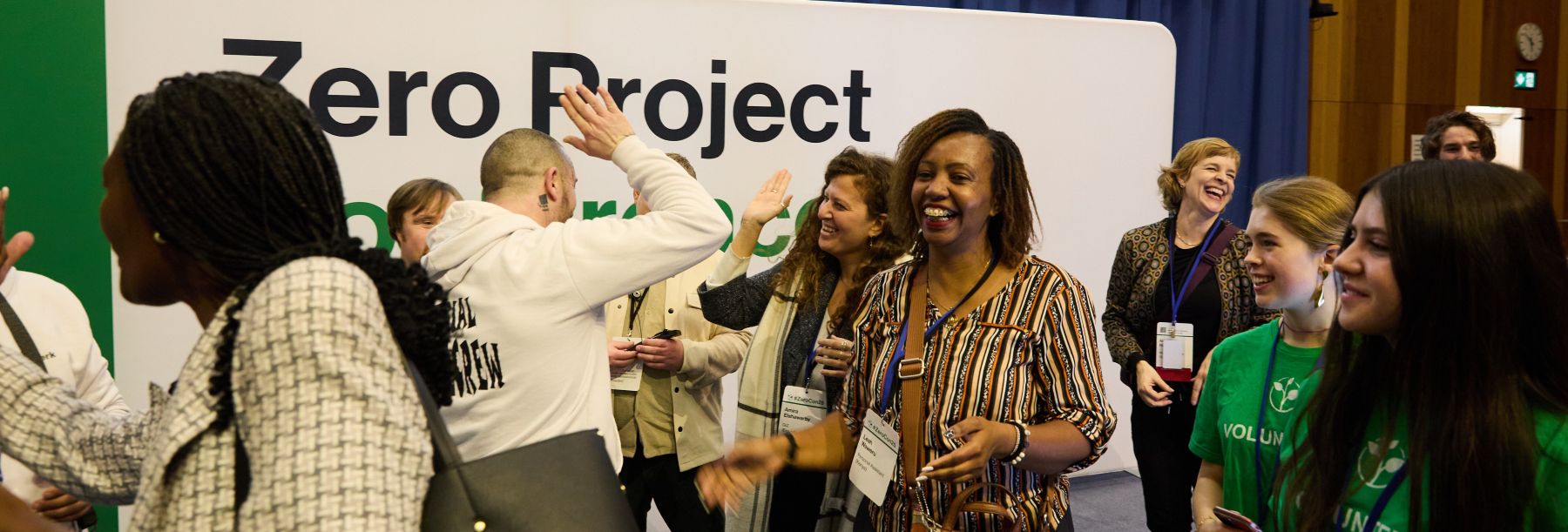
At the Zero Project Conference in Vienna, one pattern kept repeating across very different sessions: lasting accessibility change rarely starts with a policy alone, a checklist alone, or a single expert. It grows when communities build shared knowledge, shared responsibility, and practical systems that other people can use. That is what makes the work stick.
Lived experience becomes shared capability
Sinéad Burke’s keynote framed this clearly. The challenge is not just to include disabled people as end users. It is to recognize lived experience as expertise and leadership. When that happens, accessibility stops being something reviewed at the end and becomes something shaped earlier, with better judgment and better priorities.
That same idea showed up throughout the week. The strongest examples were not centered on one hero or one institution. They created ways for knowledge to move outward, so more people could make better decisions in their own settings.
The best models spread because they are usable
A strong example came from the Geodetic Institute of Slovenia. Their project on multimodal mobility used disability-led design to create tactile maps and detailed access information, then backed it with local workshops. What stood out was not just the quality of the work. It was that the model was standardized and simple enough to transfer to other places. That is how good accessibility practice grows.
The NextGen Accessibility Initiative showed something similar in a different context. By working with Gen Z organizations inside existing frameworks, it helped 200,000 students get accommodations, support, and education. That is an example of building inside the flow of real systems instead of creating a side effort that never reaches scale.
Community leadership keeps the work from staying symbolic
One of the most useful discussions looked at disability awards and recognition lists. The takeaway was not that visibility is unhelpful. It was that visibility is only the start. Irene Mbari-Kirika noted that once the list is published, the harder question begins: who is building the support structure that helps ideas turn into durable change?
That is where community-based organizations often lead. InABLE, for example, was highlighted for building knowledge and support systems for entrepreneurs in Africa. That is deeper than awareness. It is the kind of work that helps capability take root, especially in places where formal systems are not doing enough yet.
Trust matters most when the stakes are high
The crisis response sessions made this even clearer. In emergencies, accessible support cannot depend on last-minute improvisation. It depends on preparation, coordination, training, and trusted relationships long before something goes wrong.
Projects like Purple Vest and GADRA showed why community-led work matters here. Purple Vest focuses on accessible evacuation and support for disabled people and older adults. GADRA made the larger structural point: only 1% of disaster relief funding goes to disability-led organizations. That gap explains a lot. When communities are excluded from leadership, support is often designed around assumptions instead of lived reality.
The disaster database work in rural Vietnam was another strong example. The Hanoi Association of People with Disabilities helped develop a system that mapped households, gathered detailed infrastructure data, and trained government officials. Then that work was integrated into the national disaster monitoring system. This is what it looks like when community knowledge becomes operational infrastructure.
Inclusion grows when it is built into everyday places
The same pattern appeared in public space, culture, and daily life. The National Library of Singapore showed how physical access, defined routes, wider aisles, and support programs can be designed as part of the experience from the start. This is more than removing obstacles. It is creating environments people can actually use with confidence.
The session on Europe Beyond Access made a similar point in the arts. The network has created career opportunities for disabled and Deaf artists across 11 cultural institutions and produced toolkits for inclusive events. This is not just about welcoming people into existing spaces. It is about changing the conditions so participation can continue and grow.
What I took from it
The clearest lesson from these sessions is that accessibility becomes stronger when it is distributed. Community-based organizations often lead because they stay close to lived experience, build trust over time, and create methods that other people can adopt. They do not just advocate for change. They create the conditions that allow change to travel.
That is the kind of progress worth paying attention to. It is practical, repeatable, and built to last.